The storm has passed. You walk outside to survey the damage, and there it is — a large limb across your driveway, a tree leaning into your fence, or worse, something touching your roof. Your first instinct might be to grab a chainsaw and start cutting. Stop right there.
Storm tree cleanup is one of the most injury-prone DIY situations homeowners face. This guide will walk you through what to assess, what you can safely handle yourself, and when it’s time to call in professional storm cleanup services — so you can make smart decisions quickly and get your property back to normal safely.

Step One: Don’t Rush In
After any major storm, your first job is observation, not action.
Downed trees and large branches can hide serious hazards — especially when they’re tangled up with power lines, resting on structures, or under tension from other damaged limbs above. A tree that looks stable can shift suddenly when disturbed.
Before you touch anything, do a slow visual sweep of the area from a safe distance and ask:
- Are any branches or tree sections touching or near power lines?
- Is the tree resting on your house, garage, or fence?
- Are there broken limbs hanging overhead (sometimes called “widow makers”)?
- Is there any visible damage to gas or utility infrastructure nearby?
If the answer to any of these is yes, keep people away from the area and call a professional before proceeding.
What You Can Safely Handle Yourself
Not every piece of storm damage requires a crew. There’s plenty of lighter tree storm cleanup work that homeowners can manage safely with basic tools.
Low-Risk DIY Cleanup Tasks
- Small branches (under 2–3 inches in diameter) that are fully on the ground and away from structures or utilities
- Scattered leaf and twig debris across lawns and driveways
- Collecting and bagging brush for curbside pickup once the area has been confirmed safe
If you’re using a handsaw or loppers for small debris, work from the ground up and keep an eye on what’s above you. Wear gloves and eye protection. Keep kids and pets well clear.
When to Call a Professional
This is where a lot of people make costly — or dangerous — mistakes by underestimating what they’re dealing with.
Situations That Always Need a Pro
- Any tree or limb in contact with power lines. This is non-negotiable. Never attempt to remove or move anything touching a utility line yourself. Call your utility provider first, then a tree service.
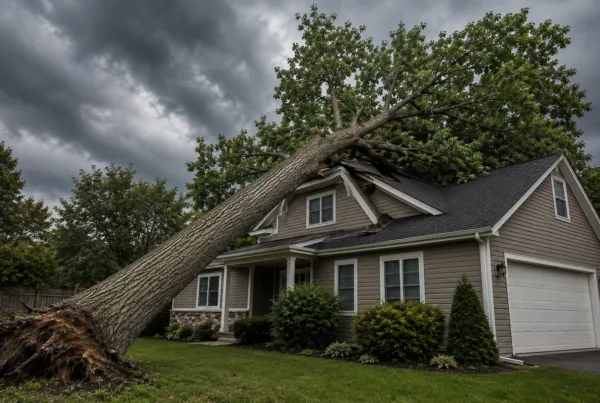
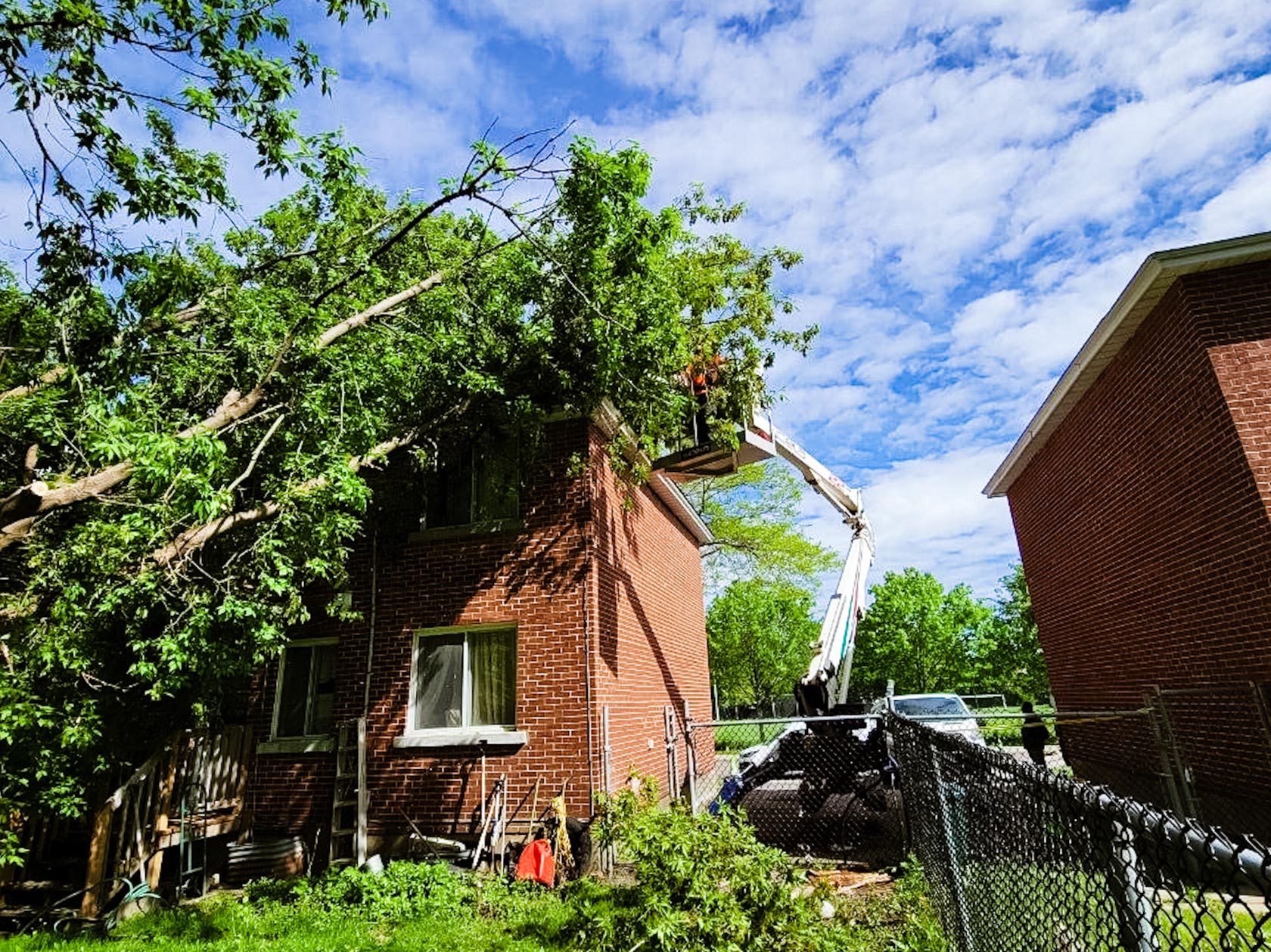
- Trees on or against structures. A tree resting on a roof, car, or fence can be under tremendous tension. Cutting the wrong spot can send it crashing in an unexpected direction.
- Large trees or major limb failures. Anything involving a chainsaw at height, or a trunk over roughly 6 inches in diameter, warrants professional equipment and expertise.
- Uprooted or leaning trees. Root systems can act like a spring — an uprooted tree can snap back violently when disturbed.
VS Tree’s emergency response team operates 24/7 and is equipped with cranes, spider lifts, and trained climbing arborists specifically for these kinds of post-storm situations. When time and safety both matter, that equipment and experience make a real difference.
A Note for Commercial Property Managers
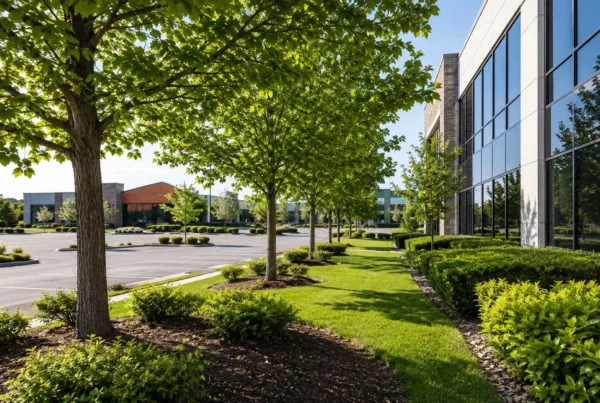
Storm damage on a commercial site adds a layer of urgency that residential properties don’t always face. Blocked entrances, damaged parking areas, and debris near pedestrian walkways create liability exposure from the moment the storm ends.
Document everything with photos immediately — this protects you for insurance purposes and provides a clear record of the pre-cleanup state. Then prioritize clearing areas with active foot traffic first. A professional storm cleanup services provider with experience on commercial sites can typically stage the work to reopen key access points quickly, even before full cleanup is complete.
After the Cleanup: Don’t Ignore What’s Left Standing
Here’s something a lot of people overlook: the trees still standing after a storm can be just as much of a concern as the ones that fell.
Major storms often cause hidden structural damage — cracks at branch unions, root disturbance from ground saturation, or wounds in the bark that open the tree up to disease and pests. A tree that survived a storm can still fail in the next one if that damage goes unaddressed.
Booking a post-storm assessment with a certified arborist after a major weather event is a good habit — especially for large, mature trees near your home or building. They can identify issues while there’s still time to address them safely and on your own timeline, rather than in emergency conditions.
FAQ: Storm Tree Cleanup
Q: Can I leave a fallen tree on my property and deal with it later? Small debris, sure. But a tree resting on a structure, blocking access, or near utilities should be addressed quickly. Beyond the safety risk, prolonged contact between a fallen tree and a roof or fence accelerates structural damage significantly.
Q: Will my homeowner’s insurance cover tree removal after a storm? It depends on your policy and the specific situation. Most policies cover removal if the tree has fallen on an insured structure (your home, garage, etc.). If it fell in your yard without hitting anything, coverage is less common. Always document damage before cleanup begins and contact your insurer early.
Q: How quickly can a tree crew respond after a storm? A reputable company with true emergency response capacity — not just a regular service call — can typically be on-site within hours of a storm, sometimes the same day. Response time depends on demand across the region; widespread storm events naturally create a surge in calls.
Q: Do I need a permit to remove a storm-damaged tree in Ottawa? Sometimes, even for emergency removals. Ottawa’s tree by-laws still apply in many situations. A good tree service will know the requirements and can help you navigate the permit process, or advise when emergency circumstances change the normal rules.
📖 Read More
Got any more questions?
If so, ask us here directly at VS Tree, Ottawa’s tree services company any questions you may have. Or if you simply want to get started with a project, reach out to us today!