Your Ash Tree Might Be Dying Right Now — Here’s How to Know
If you have ash trees on your property, this is worth your full attention. The emerald ash borer (EAB) has devastated tens of millions of ash trees across North America — and the insect is notoriously difficult to detect until serious damage has already been done.
The good news? Catching it early can make all the difference. Knowing the emerald ash borer symptoms to watch for gives you a fighting chance to save your trees — or at least get ahead of a hazardous situation before it becomes an emergency.
Here’s what to look for, when to look, and what to do if you spot something suspicious.

What Is the Emerald Ash Borer?
The emerald ash borer is a small, metallic green beetle native to Asia.
Since its accidental introduction to North America in the early 2000s, it has spread rapidly across Canada and the United States, killing ash trees in its wake.
The real damage isn’t done by the adult beetles — it’s the larvae. They burrow beneath the bark and feed on the tissue that carries water and nutrients throughout the tree. Over time, this cuts off the tree’s lifeline and kills it from the inside out.
That’s why the signs of emerald ash borer damage often show up in the canopy first, long before you’d notice anything at the base of the tree.
Early Emerald Ash Borer Symptoms to Watch For
EAB symptoms don’t always look dramatic at first. Here are the early warning signs:
1. Canopy Dieback
One of the first things you’ll notice is thinning at the top of the tree. Branches in the upper canopy begin to die back, starting at the tips. Each year, the dieback creeps further down the tree. By the time 30–50% of the canopy is gone, the tree may already be beyond saving.
2. D-Shaped Exit Holes
This is the most definitive sign. Adult beetles chew their way out of the bark, leaving behind distinctive D-shaped holes — roughly 3–4 mm wide. These aren’t round like woodpecker holes or other insect exits. They’re flat on one side and perfectly D-shaped. Look carefully on the trunk and larger branches.
3. Serpentine Galleries Under the Bark
If you peel back a small section of loose bark, you may find winding, S-shaped tunnels packed with a fine, sawdust-like frass (insect waste). These tunnels are carved by EAB larvae as they feed. Finding these galleries is a near-certain confirmation of infestation.
4. Bark Splitting and Blonding
As the tree responds to larval activity, the bark may crack or split vertically. You might also notice a “blonding” effect — lighter patches where woodpeckers have stripped away chunks of bark while foraging for larvae. Heavy woodpecker activity on an ash tree is actually one of the more telling signs of emerald ash borer activity.
5. Epicormic Shoots (Stress Sprouting)
Stressed ash trees often respond by sending up water sprouts — small, leafy shoots — from the trunk or major branches below the dying sections. This is the tree’s last-ditch attempt to photosynthesize. It looks a bit like tufts of growth in unexpected places. If you see this on an ash tree, take it seriously.
Signs of Emerald Ash Borer: A Quick-Reference Checklist
Use this checklist to assess your ash trees:
• Upper canopy thinning or dieback that progresses downward year over year
- D-shaped exit holes (3–4 mm) in the bark of the trunk or branches
- S-shaped or serpentine galleries visible under loose bark
- Vertical bark cracking or splitting
- Woodpecker damage or “blonding” — pale patches of stripped bark
- Unexpected leafy sprouts growing from the lower trunk or main branches
- Overall leaf reduction or smaller-than-usual leaves throughout the crown
If you’re checking two or more of these boxes, it’s time to call in a professional.
Why Timing Matters So Much
EAB is a slow burn. An infested tree can look relatively healthy for one to three years before the damage becomes obvious. By the time a tree looks visibly sick, it may have already lost more than half of its vascular system.
That’s why annual spring and early summer checks are so important — especially if you live in an area where EAB has been confirmed. In Ontario and much of the rest of Canada, EAB is widespread, which means ash trees anywhere in the region should be treated as at-risk.
A certified arborist can often detect early-stage infestations before you can. They know exactly what to look for and where. If you’re unsure, a professional tree assessment is the most reliable path forward. You can learn more about the arborist services VS Tree offers to homeowners and commercial property managers across the region.
What to Do If You Suspect EAB
Here’s a practical action plan:
- Don’t wait. The window for effective treatment is narrow. If you notice any of the symptoms above, get a professional opinion promptly.
- Get a proper assessment. Not all tree dieback is EAB. A certified arborist can confirm the diagnosis and recommend the right treatment — whether that’s insecticide injection, removal, or a watch-and-wait approach for early-stage cases.
- Consider treatment options carefully. Systemic insecticide treatments (like trunk injections) can be effective in earlier stages, but they need to be applied before a tree is too far gone. Ask your arborist to be direct with you about the tree’s prognosis.
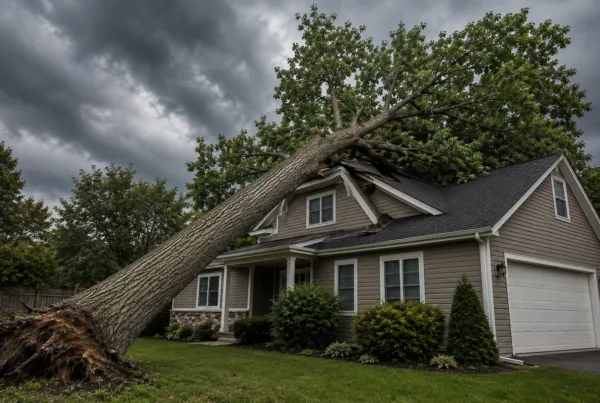
- Plan for removal if necessary. A dead or dying ash tree can become a serious hazard quickly. EAB-affected wood becomes brittle and unpredictable. If removal is unavoidable, sooner is safer — and usually less expensive than emergency removal later.
Frequently Asked Questions
How fast does EAB kill an ash tree?
Most ash trees die within 3 to 5 years of initial EAB infestation. Young or already-stressed trees can succumb more quickly — sometimes in as little as two years. This is why early detection is so critical.
Can an infested ash tree be saved?
Yes — if caught early enough. Trees with less than 30–40% canopy dieback are generally good candidates for systemic insecticide treatments. Trees that have lost more than half their canopy are typically too far gone for effective treatment and should be removed.
Do I need to report EAB?
In Canada, EAB is a regulated pest under the Plant Protection Act. If you suspect EAB on your property, you can report it to the Canadian Food Inspection Agency (CFIA). Your arborist can guide you through this process.
Are all ash tree species affected?
Yes. The emerald ash borer attacks all species of native North American ash (Fraxinus) — including green ash, white ash, black ash, and blue ash. Mountain ash (Sorbus) is not a true ash and is not affected.
The emerald ash borer is one of the most destructive tree pests this region has ever seen — but knowledge is your best tool. Walk your property, check your ash trees, and don’t hesitate to reach out for a professional opinion if something looks off.
Got any more questions?
If so, ask us here directly at VS Tree, Ottawa’s tree services company any questions you may have. Or if you simply want to get started with a project, reach out to us today!