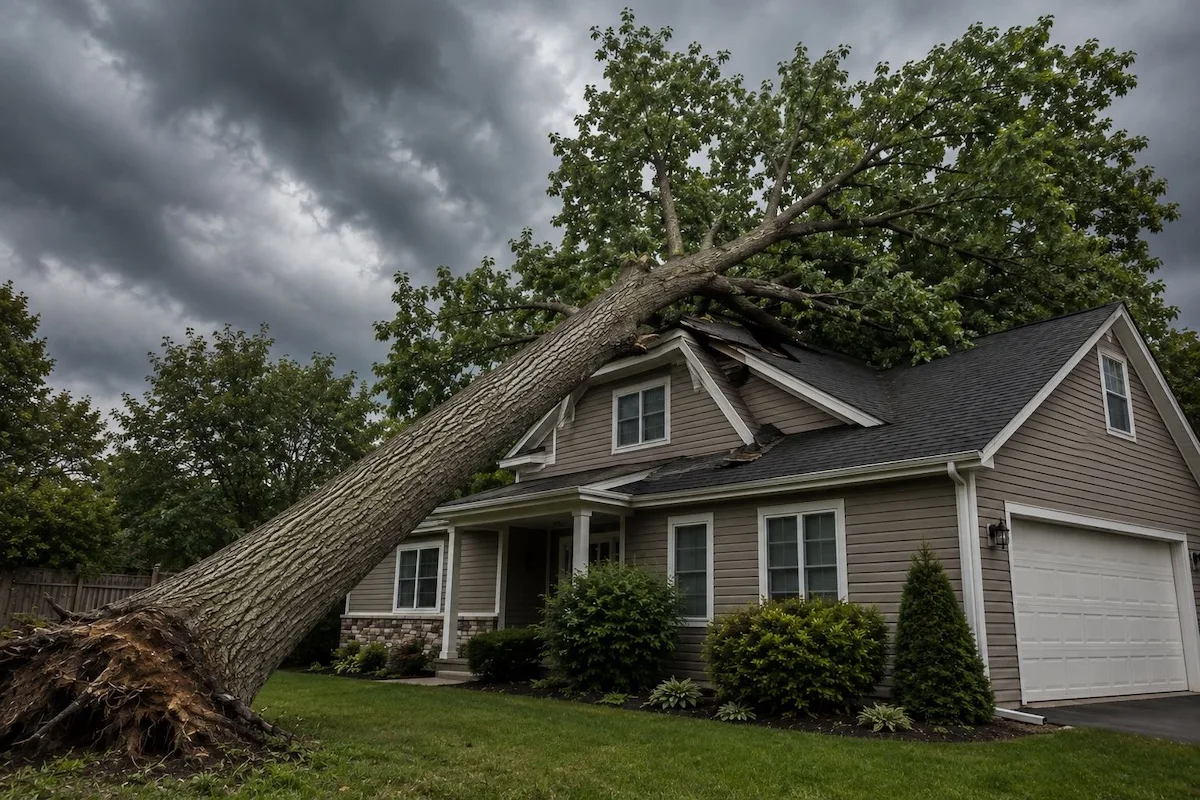
It’s 6 a.m. and a massive limb from your neighbour’s maple is resting on your garage roof. Do you call someone right now, or can it wait until Monday?
That question — “is this urgent or not?” — is one we get asked constantly, and the answer isn’t always obvious. Some storm-damaged trees look terrifying but pose zero immediate risk. Others look fine and are one gust away from coming down on a car, a power line, or a person.
The takeaway: if a tree is actively threatening people, structures, or utilities, treat it as an emergency and get a professional out immediately. If it’s damaged but stable, you likely have time to plan a proper removal instead of rushing into a costly after-hours call.

What Actually Counts as an Emergency
Not every fallen branch needs a 2 a.m. phone call. Here’s what genuinely does:
- The tree or a large limb is touching (or near) power lines. This is the single most dangerous situation homeowners encounter after a storm. Never attempt to move branches near lines yourself — call your utility company first, then a tree service.
- A tree is leaning or has fallen onto a structure — your house, garage, deck, fence, or a neighbor’s property.
- A large tree is blocking a driveway, road, or emergency access point.
- A tree has visible root heaving (the ground around the base is lifted or cracked), which signals it could topple with the next strong wind.
- A split trunk or major structural crack has appeared, even if the tree hasn’t fallen yet.
If any of these apply, that’s when you need emergency tree removal — not a scheduled appointment two weeks out.
When It Looks Bad But Isn’t Actually Urgent
Storms leave a mess, and mess tends to trigger panic. But a lot of what looks alarming right after a windstorm is actually low-risk once you look closer.
A few examples:
- Small to medium branches down in the yard, away from structures and walkways
- Superficial bark damage or scraping on the trunk
- A tree that’s lost leaves or smaller branches but is still upright and rooted solidly
- Debris scattered across the lawn with no lean or structural compromise to the tree itself
In these cases, you can safely wait a few days to schedule storm damaged tree removal or cleanup with a certified arborist, rather than paying emergency rates for something that isn’t going anywhere.
A Quick Gut-Check
Ask yourself three questions:
- Is anyone or anything currently in the tree’s fall path?
- Is the tree touching or near power infrastructure?
- Has the root structure or trunk been compromised?
If you answered “yes” to any of these, it’s an emergency. If it’s “no” across the board, you likely have breathing room.
Why Emergency Removal Isn’t a DIY Job
We understand the instinct to grab a chainsaw and handle it yourself, especially when a tree is blocking your driveway before work. But storm-damaged trees carry hidden tension — a leaning trunk or a hung-up limb can release unpredictably, and that’s how serious injuries happen.
A certified arborist assesses the whole picture before cutting anything: the direction of lean, root plate condition, whether the tree is under tension against another object, and what’s nearby that could be hit if something shifts. That assessment is the difference between a controlled removal and a second emergency.
What to Do While You Wait for Help
If you’ve called for emergency tree removal and are waiting on a crew, here’s how to stay safe in the meantime:
- Keep people and pets away from the area, including a buffer zone beyond where you think the tree could fall
- Don’t attempt to cut, pull, or move any part of the tree yourself
- If power lines are involved, stay well back and contact your utility provider immediately
- Take photos for insurance purposes once it’s safe to do so, but don’t approach for a closer shot
Commercial Properties: A Slightly Different Calculus
For property managers, the stakes are a bit different. A damaged tree on a commercial site isn’t just a hazard — it’s a liability if a tenant, customer, or employee gets hurt. Even a tree that “probably” wouldn’t fall is worth a professional risk assessment quickly, since foot traffic and parking areas raise the cost of getting it wrong.
FAQ
How fast can an emergency tree removal happen? Most reputable tree services, including VS Tree, offer same-day or next-day emergency response for genuinely hazardous situations. Response time depends on severity and current demand, especially after a widespread storm event.
Will my insurance cover emergency tree removal? Often, yes — particularly if the tree damaged a structure or fell as a direct result of storm activity. Check your policy specifics and take photos before cleanup begins.
Can a tree be saved after storm damage instead of removed? Sometimes. If the damage is limited to a portion of the canopy and the trunk and root system are intact, pruning may be enough. An arborist can tell you whether restoration or removal is the right call.
Who do I call first if a tree hits a power line? Your utility provider, always. Don’t approach the tree or attempt any removal until the utility company confirms the lines are de-energized or safe.
Read more from VS Tree:
Got any more questions?
If so, ask us here directly at VS Tree, Ottawa’s tree services company any questions you may have. Or if you simply want to get started with a project, reach out to us today!