Most tree problems announce themselves. Leaves brown, branches snap, bark peels. Root rot is different—it works quietly underground, sometimes for years, before you notice anything wrong above the soil line.
By the time obvious symptoms show up, the damage below can already be extensive. That’s the frustrating part about root rot: the tree that looks “mostly fine” in your yard might have a root system that can no longer hold it upright in a windstorm.
The good news is that root rot does leave clues, if you know where to look. This guide walks through the tree root rot symptoms that matter most, why they happen, and when it’s time to bring in a professional.

What Causes Root Rot in the First Place?
Root rot is almost always fungal. Species like Armillaria (honey fungus) and Phytophthora are the usual culprits in Ontario landscapes, and they thrive in one specific condition: excess moisture.
Poor drainage, compacted soil, overwatering, and grading changes that redirect water toward a tree’s base all create the damp environment these fungi need to take hold. Once established, the fungus breaks down root tissue, cutting off the tree’s ability to absorb water and nutrients.
Signs of Root Rot in Trees: Above-Ground Clues
You don’t need to dig up roots to catch early signs of root rot in trees. Start by watching the canopy and trunk.
Canopy and Foliage Changes
- Leaves that are undersized, yellowing, or wilting, even when the soil looks adequately watered
- Early or unusual leaf drop, especially during the growing season rather than fall
- Sparse, thinning canopy compared to previous years, with dieback concentrated in the upper crown
- Stunted new growth, where the tree produces fewer or smaller leaves than it did the year before
Trunk and Base Symptoms
A tree with root rot often shows changes right at ground level before the problem becomes obvious anywhere else.
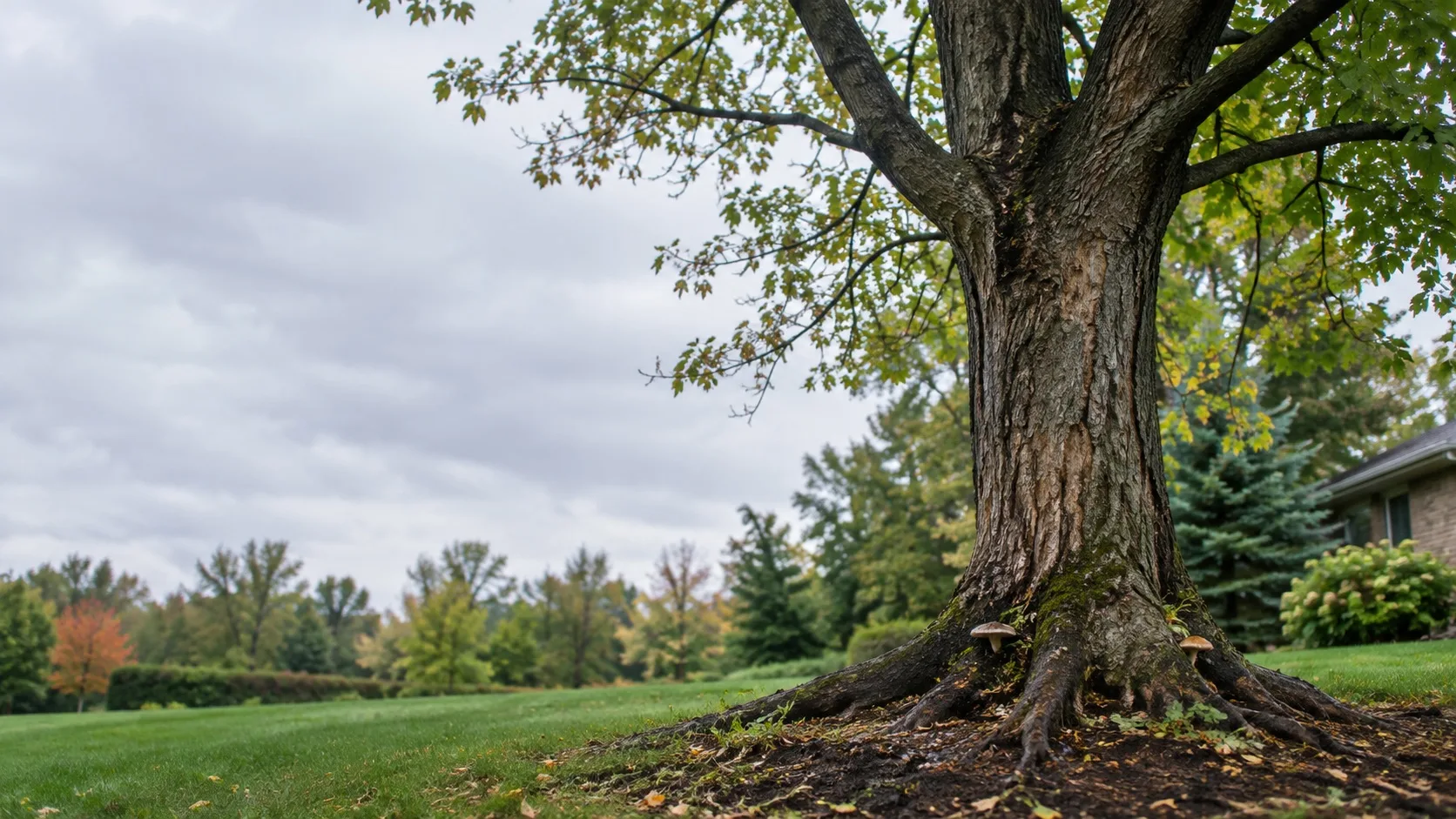
- Mushrooms or fungal conks growing at the base of the trunk or on exposed roots—these are often the fruiting bodies of the very fungus causing the rot
- Bark that’s peeling, cracked, or oozing near the root flare
- Cavities or soft, spongy wood you can press a finger into near the trunk base
- A visible lean that’s new or getting more pronounced, which signals the root system is losing its grip in the soil
Below-Ground Tree Root Rot Symptoms
If you suspect a problem, gently excavating soil around the base (without damaging healthy roots) can confirm it. Healthy roots are firm and light-coloured. Rotting roots tell a different story:
- Dark, discoloured tissue instead of the typical white or tan colour
- A soft, mushy texture that gives way easily under light pressure
- A distinct foul or musty odour, often the clearest giveaway of advanced decay
These below-ground tree root rot symptoms are the most reliable confirmation, but they’re also the reason DIY diagnosis has limits—digging around a mature tree’s root system can cause its own damage if done incorrectly.
Why You Shouldn’t Wait to Investigate
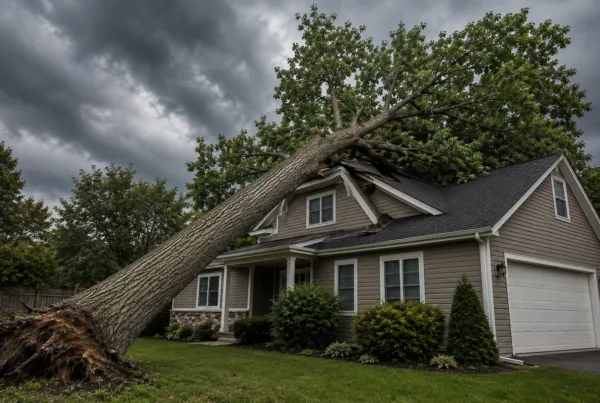
A tree with significant root rot isn’t just declining—it’s becoming a structural risk. Roots anchor a tree against wind and provide the stability that keeps 40, 60, or 100 feet of trunk and canopy standing upright.
Once enough of the root system is compromised, even a moderate windstorm can bring the tree down, often with little warning. This is a serious concern for properties with trees near driveways, patios, or buildings, and it’s a liability commercial property managers can’t afford to overlook.
When to Call a Professional
Root rot is genuinely difficult to diagnose with certainty from the surface. Fungal conks can be intermittent, canopy thinning can mimic drought stress or insect damage, and the real extent of root decay is often invisible until it’s advanced.
A certified arborist can assess trunk and root health, identify the specific fungus involved, and evaluate whether a tree can be saved or needs to come down before it becomes a hazard. If you’re noticing any combination of the symptoms above, our arborist services team can provide a proper diagnosis and a clear plan for what comes next.
FAQ: Root Rot in Trees
Can a tree with root rot be saved?
It depends on how much of the root system is affected. Catching it early—before major structural roots are compromised—gives the tree a real chance with improved drainage and targeted treatment. Advanced cases usually mean removal is the safer option.
How fast does root rot spread?
It varies by fungus species and conditions, but root rot typically progresses over months to years rather than days. That’s exactly why early detection matters so much.
Are certain tree species more prone to root rot?
Trees planted in poorly drained soil or low-lying areas are at higher risk regardless of species, though some, like maples and birches, tend to be more sensitive to prolonged wet conditions.
Is root rot contagious to other trees?
Yes, in some cases. Fungi like Armillaria can spread through root contact between neighbouring trees, which is worth knowing if you have several trees close together.
Read more from VS Tree:
Got any more questions?
If so, ask us here directly at VS Tree, Ottawa’s tree services company any questions you may have. Or if you simply want to get started with a project, reach out to us today!