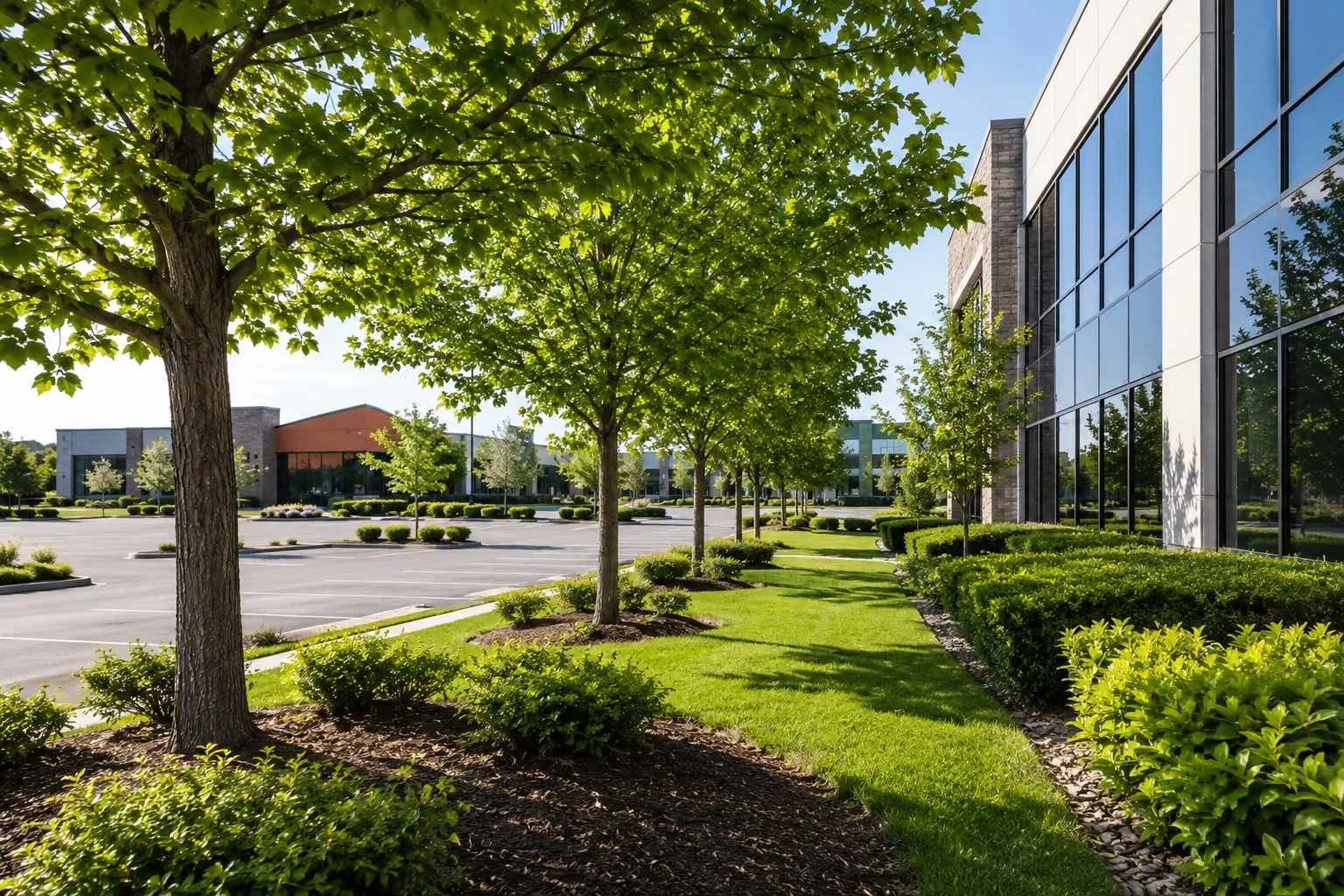
Walk past any office plaza and you’ll notice the trees before you notice the building. Healthy, well-shaped trees make a property feel cared for. Neglected ones make it feel forgotten — and can turn into liability headaches fast.
If you manage a commercial property, tree care probably isn’t top of mind until a branch drops on a parked car or a root heaves the sidewalk. The good news: a bit of planning prevents most of those surprises entirely.

Why Commercial Tree Maintenance Is Different From Residential Care
Trees on commercial properties deal with more stress than the ones in a backyard. They’re often planted in compacted soil, surrounded by pavement, and exposed to reflected heat from glass and concrete.
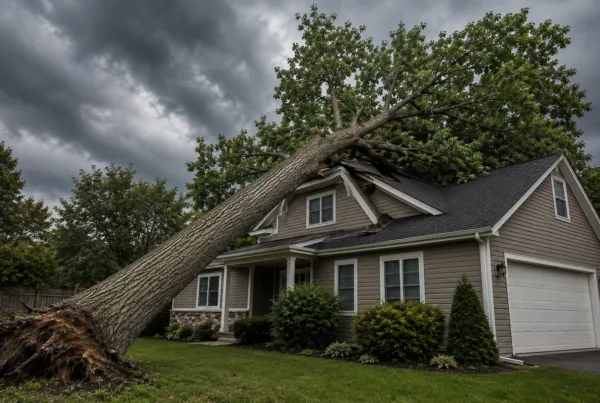
That environment shortens a tree’s lifespan and makes it more prone to structural problems. It also raises the stakes: a falling limb near a parking lot or building entrance isn’t just a maintenance issue, it’s a liability one.
This is exactly why commercial tree maintenance needs its own approach, separate from the once-a-year trim most homeowners do. Property managers are dealing with higher foot traffic, insurance exposure, and a public-facing space that reflects on the whole business.
What Regular Tree Services for Office Buildings Actually Involve
Good tree services for office buildings aren’t a single visit — they’re a rhythm built around the seasons and the specific risks of a paved, high-traffic site.
A solid maintenance plan usually includes:
- Annual health inspections to catch disease, pest infestation, or structural weakness before they become emergencies
- Structural pruning to remove deadwood, reduce wind resistance, and keep branches clear of rooflines, signage, and walkways
- Root zone management to address soil compaction and prevent roots from cracking pavement or interfering with underground utilities
- Storm damage assessment after major weather events, since a tree that looks fine can have hidden internal cracking
Seasonal Timing Matters
Late winter or early spring is generally the best window for structural pruning, since trees are dormant and it’s easier to see branch structure without leaves in the way. Fall inspections are useful too, catching issues before winter storms or heavy snow loads put extra stress on weak limbs.
Common Problems We See on Commercial Properties
A few issues come up again and again on plazas and office sites:
- Girdling roots — trees planted too close together or in undersized planters often develop roots that wrap around the trunk and slowly choke it.
- One-sided canopies — trees near buildings sometimes grow lopsided reaching for light, creating an imbalance that increases the risk of branch failure.
- Salt damage — winter de-icing salt used on walkways and parking lots can burn roots and foliage, weakening trees planted nearby.
Catching these early usually means a simple pruning or soil treatment fixes it. Left unaddressed, they can mean removal.
When It’s Time to Call In an Arborist
Not every issue needs professional attention right away, but some signs shouldn’t wait:
- Large dead branches overhanging parking areas or entrances
- Visible cracks, splits, or cavities in the trunk
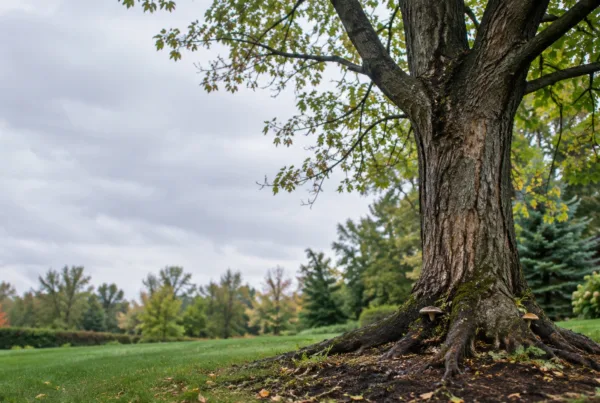
- Fungal growth or mushrooms at the base of the tree
- A noticeable lean that wasn’t there before
- Roots visibly lifting pavement or curbs
If you’re seeing any of these, an ISA-certified arborist can assess whether the tree needs pruning, cabling, or removal. In cases where a tree has become unsafe and pruning won’t fix it, our tree removal services team can walk you through the safest and most cost-effective option for the site.
Building a Maintenance Schedule That Actually Works
The properties that avoid emergency callouts tend to do a few things consistently. They inspect trees at least once a year, budget for pruning as routine maintenance rather than a surprise expense, and keep a record of which trees have had issues before.
It also helps to loop tree care into your broader grounds maintenance schedule so it doesn’t fall through the cracks between landscaping, snow removal, and parking lot upkeep. A tree that gets looked at every year rarely becomes an emergency.
FAQ
How often should commercial properties get their trees inspected?
Once a year is a reasonable baseline for most plazas and office sites, with an extra check after major storms.
Can pruning increase liability protection?
Yes. Documented, regular pruning shows due diligence, which matters if a tree-related incident ever leads to an insurance claim.
Is it cheaper to remove a struggling tree or try to save it?
It depends on the tree’s condition and location. A certified arborist can give you an honest read on whether treatment makes sense or whether removal is the safer long-term call.
Do commercial properties need permits for tree work?
Often, yes, especially for larger or protected trees. Local by-laws vary, so it’s worth checking before any major pruning or removal work begins.
Read more from the VS Tree blog:
Got any more questions?
If so, ask us here directly at VS Tree, Ottawa’s tree services company any questions you may have. Or if you simply want to get started with a project, reach out to us today!