Before a single shovel hits the ground on a new build, someone has to deal with what’s already there — and more often than not, that means trees. Whether you’re a homeowner adding a garage or a property manager breaking ground on a commercial lot, land clearing for construction is usually the very first step in the process, and getting it wrong can set your whole project back.
The takeaway: clearing land properly isn’t just cutting down trees. It’s a coordinated process involving permits, equipment, root and stump removal, and debris management, and doing it right the first time saves you time, money, and headaches down the road

What Land Clearing for Construction Actually Involves
People often picture land clearing as a chainsaw and a few afternoons of work. In reality, it’s more involved than that, especially on a lot with mature trees or dense vegetation.
A proper clearing project typically includes:
- Assessment and planning — identifying which trees need to go, which can stay, and how removal will affect grading and drainage
- Tree removal — felling and hauling away trees using the right equipment for the site’s size and access
- Stump grinding and root removal — clearing what’s below ground so it doesn’t interfere with foundations or excavation
- Debris cleanup — chipping, hauling, or repurposing wood waste so the site is truly build-ready
Skipping any one of these steps can cause problems later. A stump left in the wrong spot, for example, can throw off a foundation pour or damage equipment during excavation.
Why This Step Comes Before Everything Else
Contractors can’t accurately grade a lot, run utility lines, or pour a foundation with trees and roots in the way. That’s why site preparation services almost always start with clearing, not after excavation has begun.
There’s also a practical reason to move quickly: once a building permit is approved, timelines tend to be tight. A property manager coordinating a commercial build, for instance, doesn’t want a scheduling gap between clearing and grading crews — every idle day adds cost.
A Real-World Example
Picture a homeowner in the Ottawa area clearing a wooded lot for a new build. The site has a dozen mature maples and pines, several within a few feet of where the foundation will go. A tree removal crew assesses which trees are structurally sound enough to save (maybe a few along the property line for privacy) and which need to come down for the build to proceed safely. The rest is removed, stumps are ground below grade, and the debris is hauled off — leaving a clean, level site ready for the excavator.
Permits and By-Laws Matter More Than You’d Think
Here’s something that catches a lot of people off guard: you often can’t just start cutting trees, even on your own property. Many municipalities have tree protection by-laws that require a permit before removal, particularly for larger or “significant” trees.
Before any clearing begins, it’s worth checking:
- Whether your municipality requires a tree removal permit
- If any trees on the lot are protected by size, species, or heritage status
- Whether removal near a property line requires notifying neighbours
A qualified arborist services team can usually help navigate these requirements, since they deal with local by-laws regularly and can flag issues before they become delays.
What to Look For in a Clearing Contractor
Not every tree company is equipped for construction-scale clearing. When you’re evaluating options, it helps to ask about a few specifics:
- Equipment capacity — can they handle large or hard-to-access trees, including crane removals where needed?
- Insurance and permitting experience — will they help manage the paperwork, not just the chainsaws?
- Debris handling — is cleanup and hauling included, or will you need a separate contractor?
- Timeline coordination — can they work around your excavation or grading schedule?
Asking these questions upfront avoids the common trap of hiring on price alone and then discovering the crew can’t handle a large removal or leaves stumps behind.
Frequently Asked Questions
- Do I need a permit to clear trees for construction? In most municipalities, yes — especially for larger trees. Requirements vary by location, so it’s worth checking local by-laws or asking your contractor before work begins.
- How long does land clearing typically take? It depends on lot size and tree density, but a residential lot can often be cleared in a few days, while larger commercial sites may take a week or more.
- What happens to the trees that are removed? Usable wood can sometimes be repurposed or milled, while branches and smaller debris are typically chipped. Ask your contractor what their process looks like.
- Can some trees be left standing? Often, yes. A good clearing plan identifies healthy trees outside the building footprint that can be preserved for shade, privacy, or property value.
Read more from VS Tree:
Safety Tips When Cutting Trees & Branches Near Power Lines
Got any more questions?
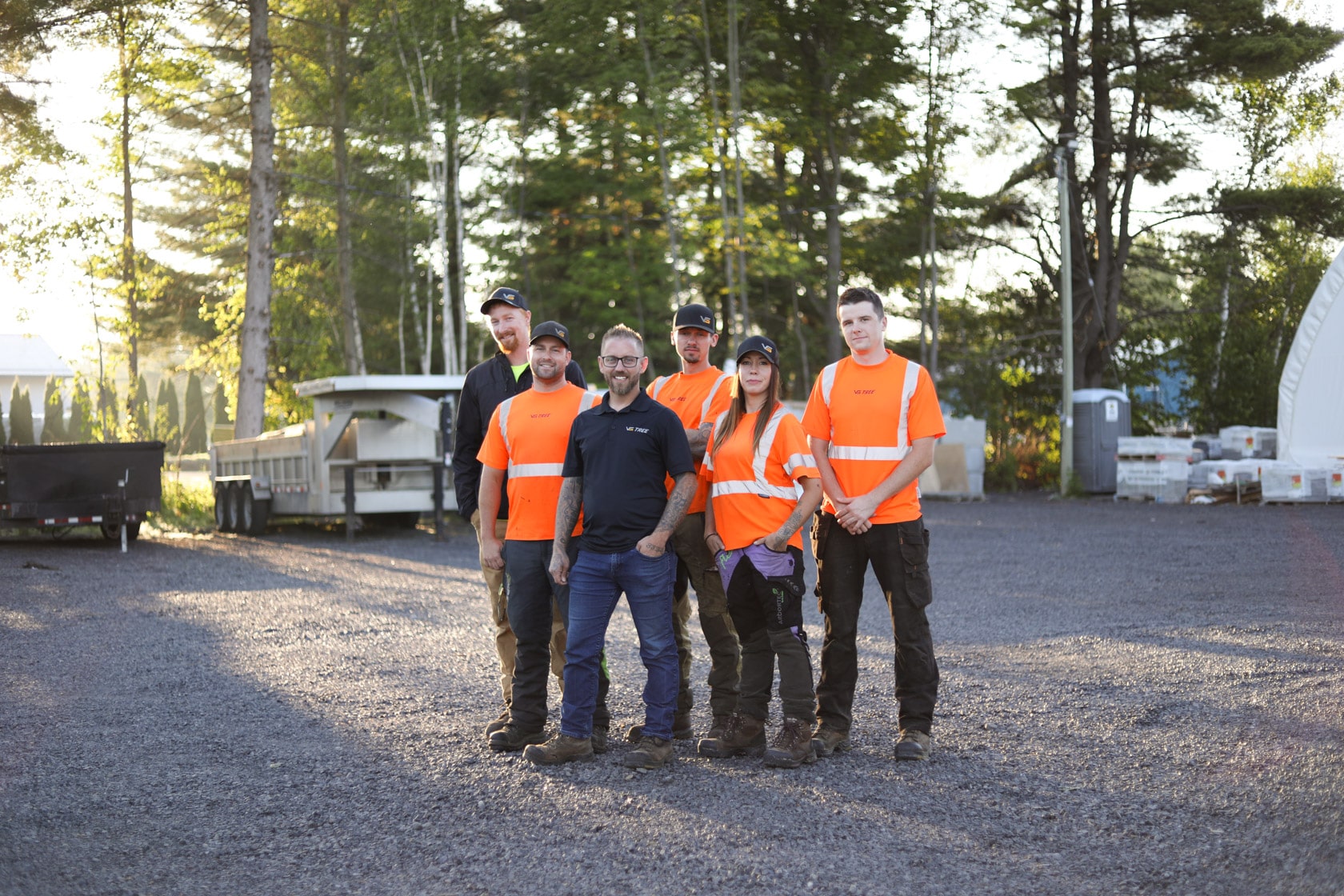
If so, ask us here directly at VS Tree, Ottawa’s tree services company any questions you may have. Or if you simply want to get started with a project, reach out to us today!