The Tree Is Gone. So Why Is the Stump Still Causing Problems?
You finally had that tree taken down. The crew cleaned up, hauled away the wood, and left — but the stump is still sitting there. It’s easy to think, “I’ll deal with it later.” Most people do.
Here’s the thing: that stump isn’t just sitting quietly. It’s rotting, attracting pests, spreading fungi, and quietly becoming a liability. The problems with tree stumps start small and compound over time. This post breaks down exactly what’s happening — and what’s actually at stake if you leave it.

The Tree Is Gone. So Why Is the Stump Still Causing Problems?
You finally had that tree taken down. The crew cleaned up, hauled away the wood, and left — but the stump is still sitting there. It’s easy to think, “I’ll deal with it later.” Most people do.
Here’s the thing: that stump isn’t just sitting quietly. It’s rotting, attracting pests, spreading fungi, and quietly becoming a liability. The problems with tree stumps start small and compound over time. This post breaks down exactly what’s happening — and what’s actually at stake if you leave it.
Stumps Don’t Just Sit There — They Deteriorate
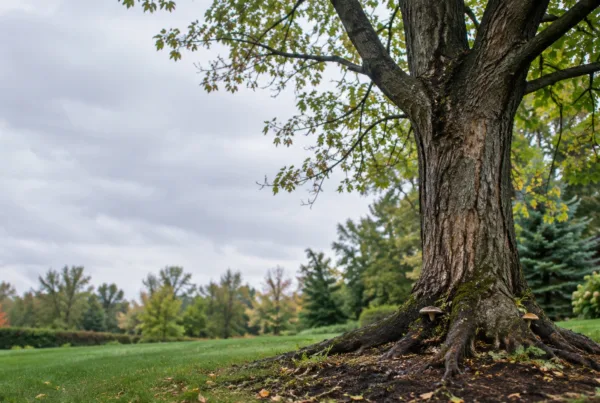
A freshly cut stump looks harmless enough. But the decay process starts almost immediately, and it brings a cascade of secondary issues along with it.
Understanding when and why remove tree stumps comes down to one core truth: a decomposing stump is an active problem, not a passive one.
Decay Attracts Wood-Destroying Insects
Rotting wood is prime real estate for carpenter ants, termites, and wood-boring beetles. These insects don’t stay in the stump — they move into nearby structures, fences, decks, and even your home’s foundation.
A stump within 10–15 feet of your house or a wooden outbuilding isn’t just an eyesore. It’s a potential entry point for an infestation that could cost thousands to remediate.
Fungal Disease Can Spread to Healthy Trees
This is the one most property owners don’t see coming. Root rot fungi like Armillaria — commonly called honey fungus — colonize a dead stump and spread through the soil via root-to-root contact.
Healthy trees nearby can become infected, weaken structurally, and eventually fail. If you have valuable mature trees on your property, a decaying stump from the same root zone is a genuine threat to their long-term health.
Regrowth: The Stump That Fights Back
Some tree species don’t take removal lying down. Maples, elms, willows, and many fruit trees will send up clusters of new shoots — called suckers — from the base of a cut stump or from lateral roots.
Left unchecked, these suckers:
- Drain energy and nutrients from surrounding plants and turf
- Grow quickly into dense, multi-stemmed regrowth that’s harder to manage over time
- Cause root systems to continue expanding beneath the surface
You can trim the suckers repeatedly, but they’ll keep coming back until the stump and root system are fully removed or treated. It becomes an ongoing maintenance task with no end in sight.
Property and Liability Risks
Beyond biology, stumps create practical problems that affect your property’s value and your legal exposure.
Trip and Fall Hazards
A stump at ground level — especially one that’s been there long enough to blend into the lawn — is a genuine trip hazard. For commercial property managers, this is a liability concern that shouldn’t be taken lightly. A guest, tenant, or contractor who trips on a concealed stump can result in a costly claim.
Lawn and Landscaping Damage
Stumps interfere with mowing, force landscapers to work around them, and create uneven terrain. Over time, the expanding and contracting root system can heave sidewalks, crack driveways, and disrupt irrigation lines.
If you’re planning any landscaping improvements, replanting, or hardscaping, a stump in the ground limits what’s possible and complicates the work.
Curb Appeal and Property Value
For homeowners preparing to sell, and commercial managers maintaining a professional exterior, stumps simply look neglected. They signal deferred maintenance to potential buyers, tenants, and clients — and they can affect appraised value more than most people expect.
The Problems With Tree Stumps Are Cumulative
None of these issues are typically catastrophic on day one. But they compound. A stump that seemed like a minor inconvenience in year one becomes a pest magnet, a fungal vector, and a regrowth problem by year three.
The longer it sits, the more expensive and complex removal becomes — especially if significant regrowth has established or if root decay has spread into adjacent areas.
If you’re weighing your options after a recent tree removal, VS Tree’s tree removal and stump grinding services can walk you through the right approach for your property type and site conditions.
Stump Grinding vs. Full Stump Removal: What’s the Difference?
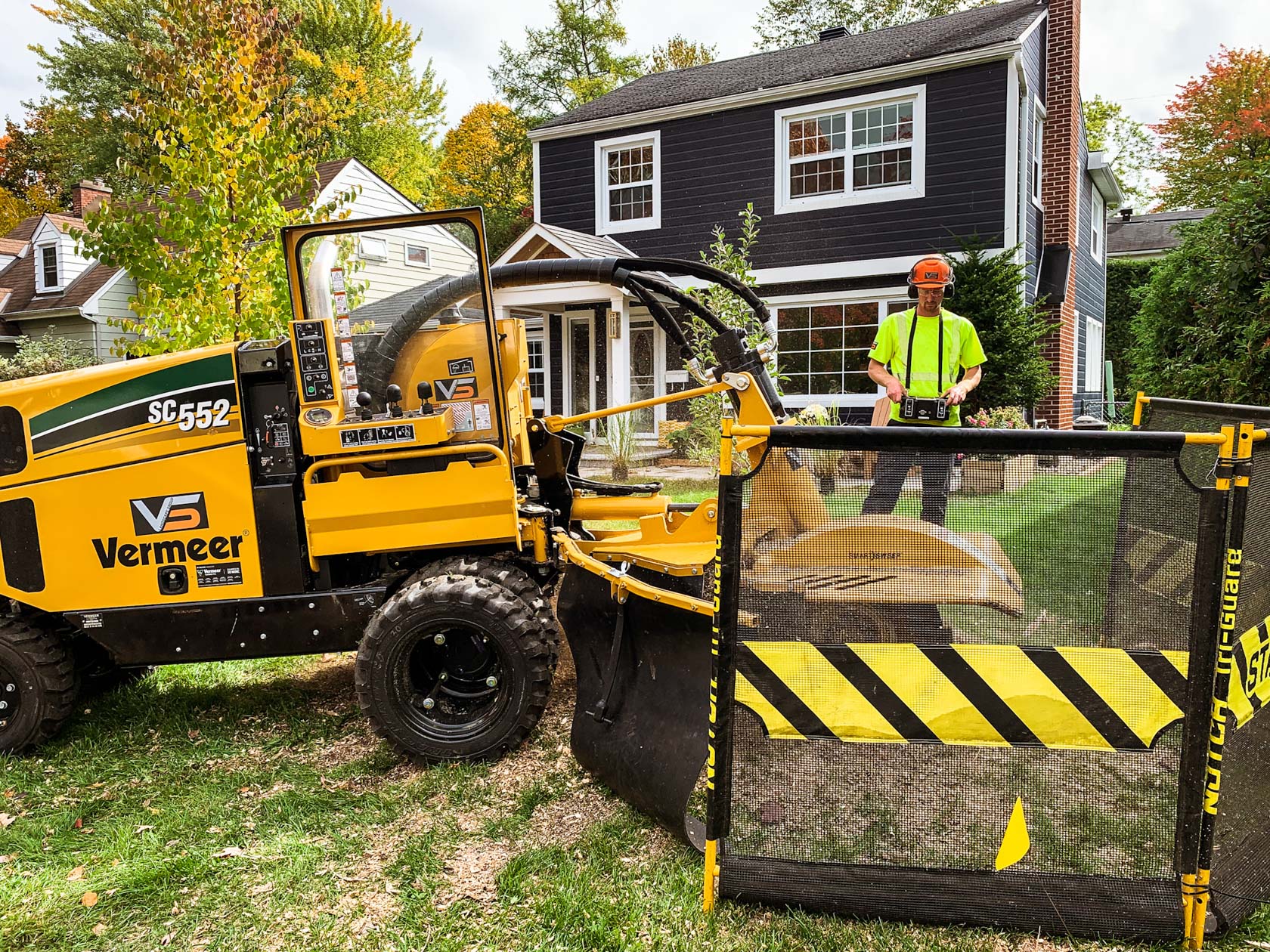
Stump grinding uses a machine to grind the stump down below grade — typically 6–12 inches below the soil surface. It’s fast, effective, and the most common solution for residential and commercial properties. The remaining wood chips can be used as mulch or removed.
Full stump removal excavates the entire root ball. It’s more disruptive and typically reserved for situations where replanting in the same spot is planned, or where root spread is causing structural damage to nearby infrastructure.
For most homeowners and property managers, stump grinding is the right call.
FAQ: Tree Stump Removal
How long does it take for a stump to rot naturally? Depending on the species, stump size, and climate, natural decomposition takes anywhere from 3 to 10 years — sometimes longer for dense hardwoods like oak. That’s a long time for the associated problems to accumulate.
Can I just cover the stump with soil or mulch? Covering a stump doesn’t stop decay, fungal spread, or insect activity — it just hides it. In some cases, it can accelerate moisture retention and speed up the problems you’re trying to avoid.
Is stump grinding safe near garden beds or structures? Yes, when done by a qualified professional. A certified arborist will assess proximity to irrigation lines, buried utilities, and structures before grinding begins. Always confirm utilities are located before any ground work.
Does stump removal kill the roots? Stump grinding removes the visible stump and the upper root mass. Deeper lateral roots will naturally decay over time once the food source (the stump) is eliminated. For most species, this is sufficient to stop regrowth.
Read More
Got any more questions?
If so, ask us here directly at VS Tree, Ottawa’s tree services company any questions you may have. Or if you simply want to get started with a project, reach out to us today!